As a rather young undergrad outside of the last few years I have no interest in mathematics. Well that isn't quite right, rather the interest I did have was left alone outside on the cold infertile ground. Upon reinvigorating one of what is practically my largest passion, and luckily skillset, I decided to dive into some history surrounding the field as a whole. I ordered History of Mathematics by Carl B. Boyer as an unrelated topic. One of my friends online recommended me "The Man Who Knew Infinity" which I really enjoyed. Although creative liberties are taken at times as opposed to unvarnished truth, I believe this is no reason one cannot enjoy a good film. A double recommendation to those who enjoyed Good Will Hunting. I have scant suspicion without digging any further that Will was in fact a roman à clef for Ramanujan.
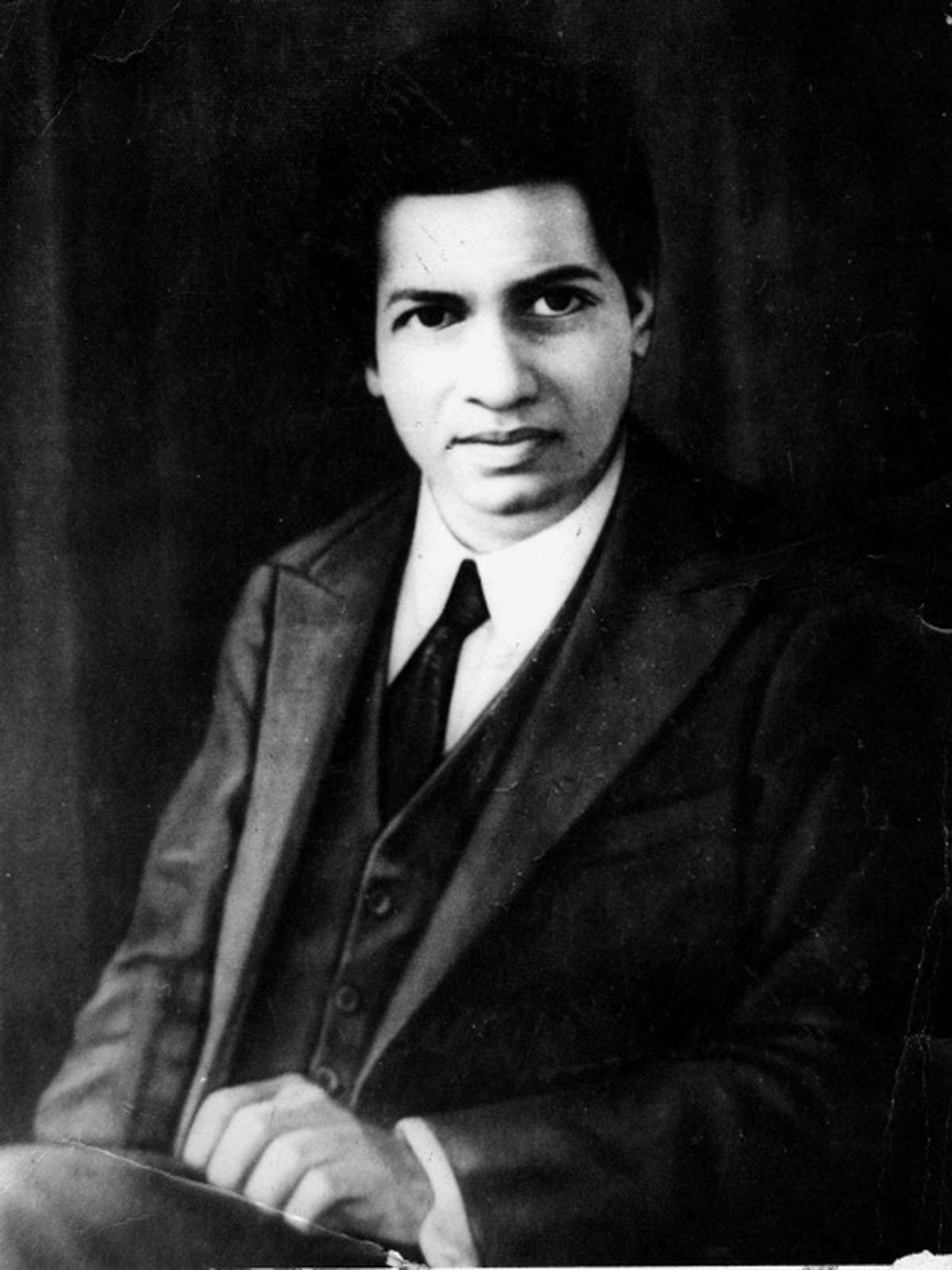
Ramanujan (1887–1920) was a self-taught mathematician from Kumbakonam, Tamil Nadu, having died at just 32 years of age. He produced so much, and so complex of work that mathematicians have still yet to unpack a lot of it more than a century later. He grew up in modest poverty, failed college exams twice (due to priority of mathematics to the exclusion of anything else), and spent most of his adult years working as a clerk in Madras while filling notebooks with results he had no one to share with. In 1913 he sent a letter to G.H. Hardy at Cambridge that contained roughly 120 theorems with a lack of proofs for any of them. Hardy and Littlewood, however, recognized this wasn't the work of a crank, with Littlewood having reportedly said that the theorems "must be true because, if they were not true, no one would have had the imagination to invent them."
Ramanujan's contributions revolved around several areas: the analytic theory of numbers (especially the partition function p(n) and its congruences), elliptic functions, continued fractions, infinite series, and modular equations. His work on p(n) proving the Ramanujan congruences, that p(5n+4) ≡ 0 (mod 5), p(7n+5) ≡ 0 (mod 7), p(11n+6) ≡ 0 (mod 11), opened a line of inquiry that runs directly to the Langlands program and modern number theory. Freeman Dyson, trying to understand these congruences combinatorially, introduced the notion of the rank of a partition, which Ramanujan never wrote down but which somehow the congruences implied.
One of the most interesting strands of his work is mock theta functions, which he described in his final letter to Hardy as "a new class of functions" with theta-function-like asymptotic behavior near roots of unity, but which are emphatically not theta functions. Much of the Lost Notebook I've heard is about q-series and mock theta functions, with some weight also given to modular equations and singular moduli, as well as the remainder about integrals, Dirichlet series, congruences, and asymptotics. The mock theta functions were a cluster of formally ungrounded objects for more than eighty years. The resolution came in 2002 with Sander Zwegers's PhD thesis showing they are holomorphic parts of harmonic Maass forms (a modern framework Ramanujan couldn't have possessed).
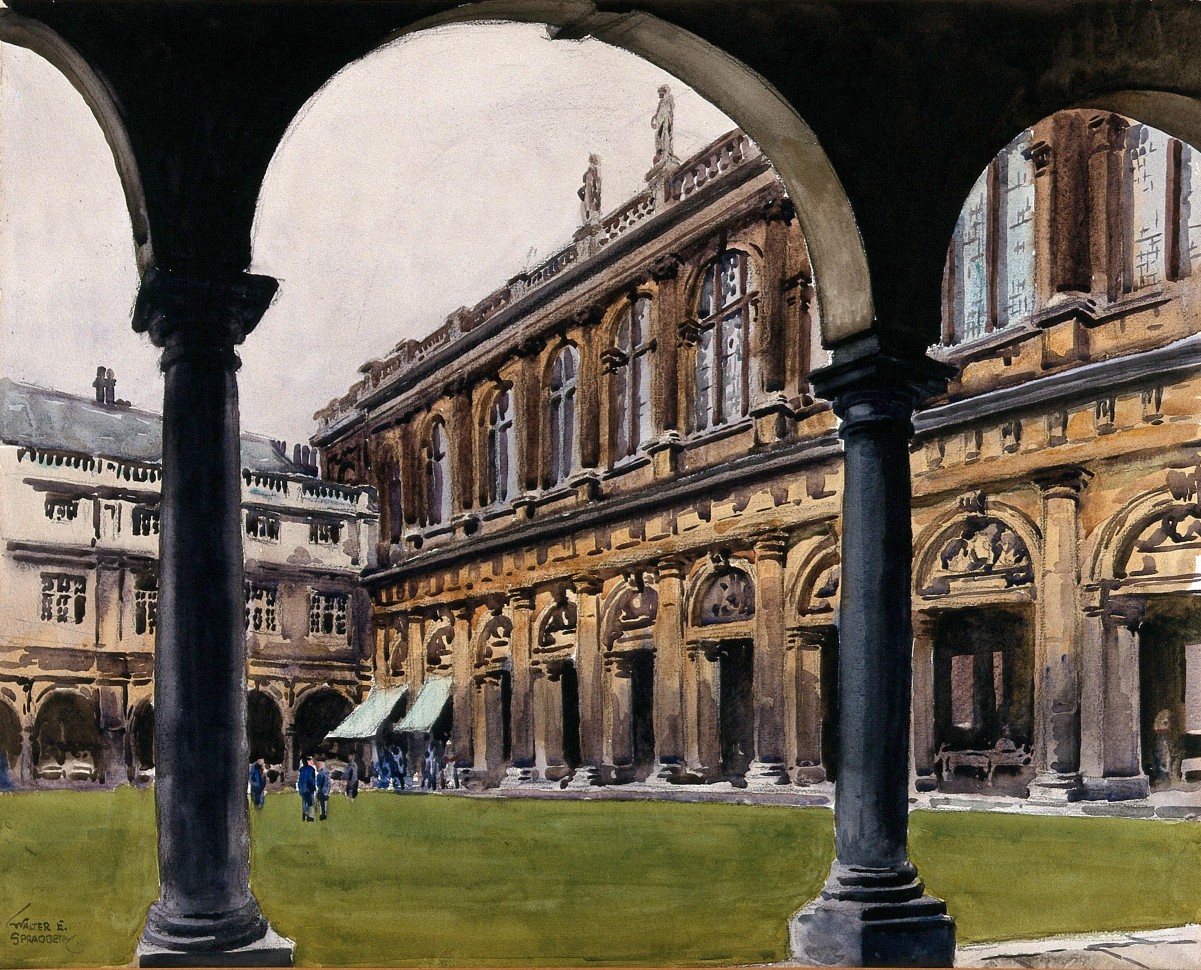
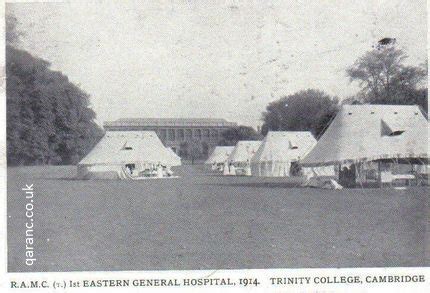
Another useful correction is that surrounding Ramanujan's Lost Notebook, which is doubly incorrect as the body of theorems was not a notebook nor was it lost. The notes, which consisted of unordered sheets more than one hundred pages written on 138 sides in Ramanujan's distinctive handwriting, contained over 600 formulas listed consecutively without proofs. R.A. Rankin and J.M. Whittaker knew of its existence, however, as they had been archived as Ramanujan papers in the Trinity College Library at Cambridge. It seems after Ramanujan's death, Hardy passed the papers to G.N. Watson, who with Wilson began a project of editing all of Ramanujan's notebooks. Wilson died in 1935; Watson lost interest. The manuscript sat at Trinity College until George Andrews discovered it in 1976, and as he thumbed through its pages, he recognized the mock theta functions on which he had written his PhD thesis.
Recommended
-
To Read
Primary
- Ramanujan, S., Collected Papers of Srinivasa Ramanujan, ed. Hardy, Seshu Aiyar, Wilson (Cambridge, 1927)
- Ramanujan, S., The Lost Notebook and Other Unpublished Papers (Narosa/Springer, 1988)
- Hardy, G. H., Ramanujan: Twelve Lectures on Subjects Suggested by His Life and Work (Cambridge, 1940)
- Ramanujan's Letters to Hardy (1913 and 1920) — reproduced in Collected Papers
Papers
- Watson, G. N., "The Final Problem: An Account of the Mock Theta Functions" — Journal of the London Mathematical Society, 1936
- Zwegers, Sander, Mock Theta Functions (PhD Thesis, Utrecht, 2002)
- Dyson, Freeman, "A Walk Through Ramanujan's Garden" (1987) — reprinted in Selected Papers of Freeman Dyson
- Ono, Ken, "Unearthing the Visions of a Master: Harmonic Maass Forms and Number Theory" — Current Developments in Mathematics, 2008
- Schneider, Robert P., "Uncovering Ramanujan's 'Lost' Notebook: An Oral History" — arXiv:1208.2694, 2012
- Berndt, Bruce C., Ramanujan's Notebooks, Parts I–V (Springer, 1985–1998)
- Andrews, George E. & Berndt, Bruce C., Ramanujan's Lost Notebook, Parts I–V (Springer, 2005–2018)
- Berndt, Bruce C. & Rankin, Robert A. (eds.), Ramanujan: Letters and Commentary (AMS/LMS, 1995)
- Berndt, Bruce C. & Rankin, Robert A. (eds.), Ramanujan: Essays and Surveys (AMS, 2001)
Biography
- Kanigel, Robert, The Man Who Knew Infinity (Scribner, 1991)
Notes
See Also
- G.H. Hardy (Placeholder)
- Littlewood (Placeholder)
- Trinity College (Placeholder)