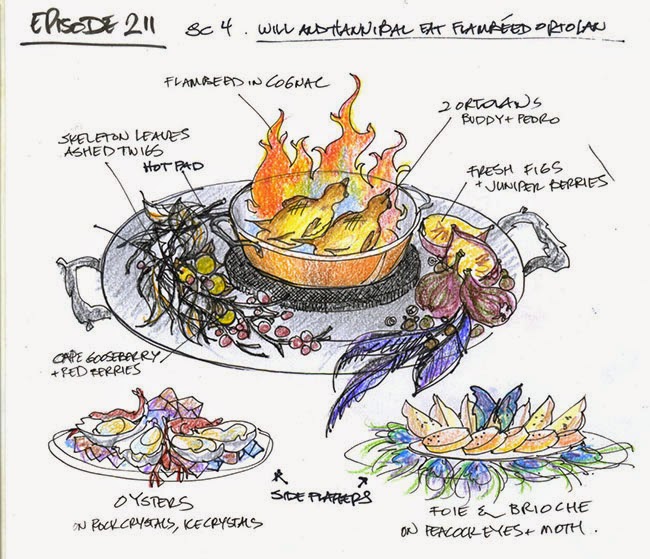
I want to say the first time I ran into the concept of ortolan bunting being served in its traditional way was watching the show Billions (Season 3, Episode 6, "The Third Ortolan"). I didn't understand the act I was witnessing as I was only half paying attention. Upon rewinding I became intrigued and started to dig into this ritual sacrifice disguised as dinner.
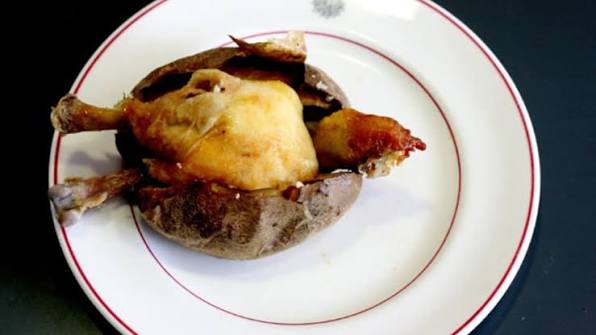
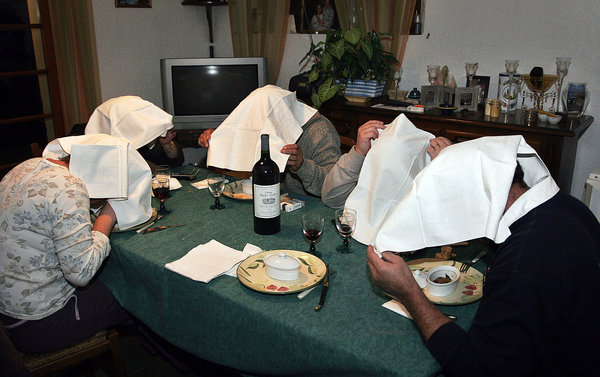
The ortolan (Emberiza hortulana) is a small songbird, about 16-17 cm in length, that was hunted across southern France for centuries. The practice was banned in France in 1999 under the French Rural Code, though the species had already been protected at the EU level since 1979 under the Birds Directive (Council Directive 79/409/EEC). France simply failed to enforce that protection for twenty years. The way the dish was prepared: catch a wild ortolan and lock it in a cage, then the preparer would either gouge out its eyes, lock it in a dark room, or cover the cage with cloth to introduce a perpetual darkness that stripped the bird of its sense of time. During this phase they would also fatten the bird by providing abundant millet, figs, and oats. The darkness disrupted the bird's circadian rhythm and caused it to eat compulsively, sometimes doubling or quadrupling its body weight. Once the fattening process had been completed the bird, still alive, was drowned in a vat of Armagnac. The goal was to allow the Armagnac to fill the lungs and permeate the flesh from the inside out. The bird would then be roasted whole, often for six to eight minutes in its own fat, before being served and expected to be consumed whole, bones and all, feet first. While eating, the diner covers their head with a large napkin. The most popular explanation is that this is done to "hide the act from God", though others say it traps the aromas for a fuller sensory experience, or simply conceals the unsightly act of eating a whole bird from fellow diners.
Most sources believe this tradition has faded since its banning. Others believe it continues in a less extreme fashion while still staying true to the tradition, whatever that means.
Recommended
-
To Read
Primary Sources
- Jean Anthelme Brillat-Savarin, Physiologie du gout (1825). M.F.K. Fisher translation (The Physiology of Taste, 1949) is the standard English edition
- Apicius, De re coquinaria (c. 4th century). Grocock & Grainger critical edition (2006) is the scholarly standard
- Giovanni Pietro Olina, Uccelliera (1622)
- Edgar Allan Poe, "The Duc de L'Omelette" (1832)
- Anthony Bourdain, Medium Raw (2010)
Papers
- Jiguet et al., "Unravelling migration connectivity reveals unsustainable hunting of the declining ortolan bunting," Science Advances, 2019
- Menz & Arlettaz, "The precipitous decline of the ortolan bunting: Time to build on scientific evidence to inform conservation management," Oryx, 2012
- Jiguet et al., "An update of European breeding population sizes and trends of the Ortolan Bunting," Ornis Fennica, 2016
- Fischler, "Food, Self and Identity," Social Science Information, 1988
Gastronomy & Food Studies
- Priscilla Parkhurst Ferguson, Accounting for Taste: The Triumph of French Cuisine (2004)
- Stephen Mennell, All Manners of Food: Eating and Taste in England and France from the Middle Ages to the Present (1985)
- Paul Freedman (ed.), Food: The History of Taste (2007)
Philosophy & Anthropology
- Mary Douglas, Purity and Danger: An Analysis of Concepts of Pollution and Taboo (1966)
- Georges Bataille, Erotism: Death and Sensuality (1957)
Conservation
- Ozzie Sollien, The Enigma of the Ortolan Bunting: Real Life History versus Conservation Theory (2024)
Notes
See Also