Lectures
Course lecture notes covering mathematics from foundational precalculus through abstract algebra, real analysis, topology, and mathematical modeling.
Status Indicator
The status indicator reflects the current state of the work: - Abandoned: Work that has been discontinued - Notes: Initial collections of thoughts and references - Draft: Early structured version with a central thesis - In Progress: Well-developed work actively being refined - Finished: Completed work with no planned major changes This helps readers understand the maturity and completeness of the content.
Confidence Rating
The confidence tag expresses how well-supported the content is, or how likely its overall ideas are right. This uses a scale from "impossible" to "certain", based on the Kesselman List of Estimative Words: 1. "certain" 2. "highly likely" 3. "likely" 4. "possible" 5. "unlikely" 6. "highly unlikely" 7. "remote" 8. "impossible" Even ideas that seem unlikely may be worth exploring if their potential impact is significant enough.
Importance Rating
The importance rating distinguishes between trivial topics and those which might change your life. Using a scale from 0-10, content is ranked based on its potential impact on: - the reader - the intended audience - the world at large For example, topics about fundamental research or transformative technologies would rank 9-10, while personal reflections or minor experiments might rank 0-1.
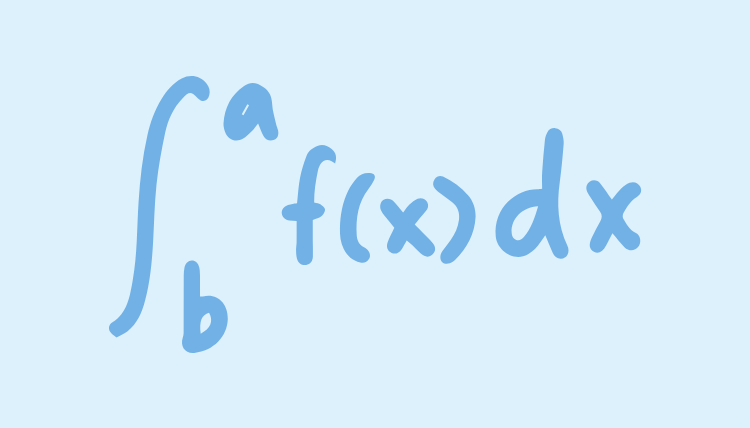
Single Variable Calculus
Differentiation and integration of functions of one variable, with applications.
Calculus I
Limits, continuity, differentiation, applications of derivatives, optimization, and the fundamental theorem of calculus.

Calculus II
Integration techniques, series, convergence tests, Taylor expansions, and applications to physics and engineering.
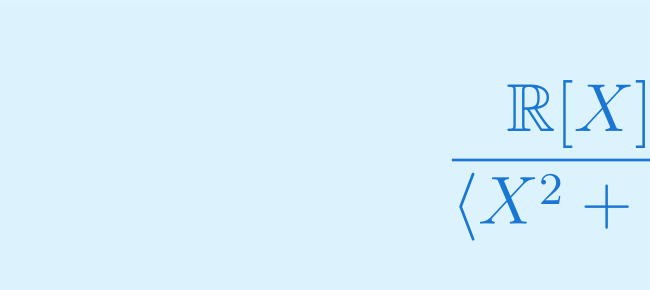
Linear Algebra
Vectors, matrices, determinants, eigenvalues, eigenvectors, vector spaces, linear transformations, and diagonalization.

Calculus III
Multivariable calculus: partial derivatives, multiple integrals, vector calculus, and applications in physics.

Calculus IV
Advanced integration techniques, surface integrals, and applications in differential geometry and fluid dynamics.
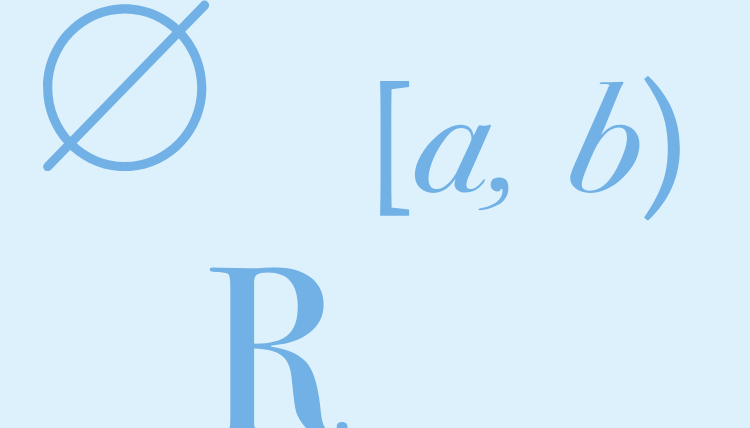
Bridge to Abstract Mathematics
Introduction to proof techniques, logic, set theory, functions, relations, and mathematical structures. Prepares students for abstract mathematics.

Modern Algebra I
Introduction to groups, rings, fields, and vector spaces. Topics include group theory, ring theory, and elementary field theory.
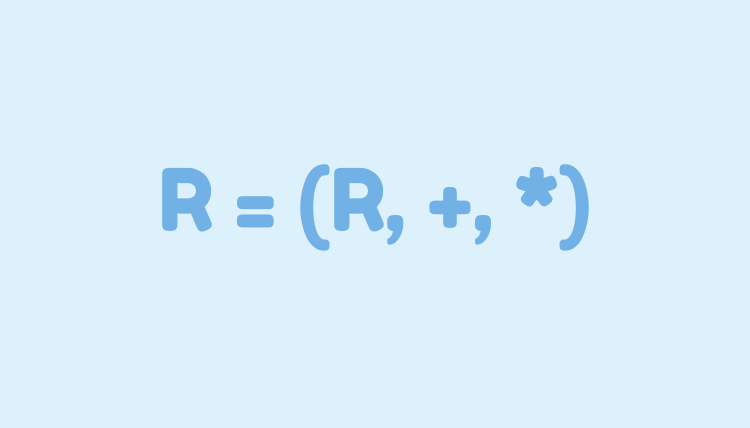
Modern Algebra II
This course builds upon the concepts learned in Modern Algebra I, focusing on advanced topics in group theory, ring theory, and field theory. Students will explore topics such as Galois theory, modules, and advanced structural theorems.

Number Theory
Prime numbers, divisibility, congruences, Diophantine equations, modular arithmetic, and applications of number theory.

Real Analysis I
Real numbers, sequences, limits, continuity, differentiation, integration, and series in one variable.

Real Analysis II
This course continues the study of real analysis, focusing on the theory of sequences and series, functions of several variables, and integration. Topics include the rigorous development of concepts such as limits, continuity, and differentiability.
Introduction to Topology I
Introduction to topological spaces, open sets, closed sets, continuity, homeomorphisms, and compactness.
Mathematical Models
This course introduces mathematical modeling techniques in a variety of real-world contexts. Topics include dynamic systems, differential equations, optimization, and computational methods for solving models.
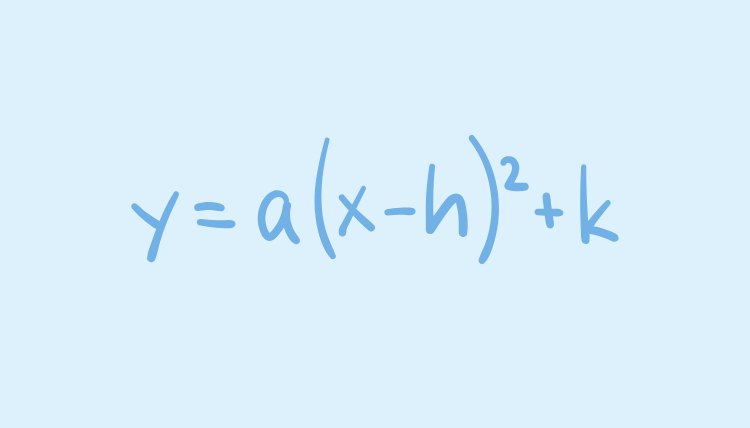
Pre-Calculus
Study of functions, polynomial and rational expressions, exponential and logarithmic functions, trigonometry, and their applications.
Topics in Euclidean Geometry
Classical topics in Euclidean geometry, including axioms, constructions, and geometric proofs.