Who am I online & what have I done? Contact information; sites I use; computers and software tools; things I’ve worked on; psychological profiles
status: In Progress
Status Indicator
The status indicator reflects the current state of the work:
- Abandoned: Work that has been discontinued
- Notes: Initial collections of thoughts and references
- Draft: Early structured version with a central thesis
- In Progress: Well-developed work actively being refined
- Finished: Completed work with no planned major changes
This helps readers understand the maturity and completeness of the content.
·
certainty: certain
Confidence Rating
The confidence tag expresses how well-supported the content is, or how likely its overall ideas are right. This uses a scale from "impossible" to "certain", based on the Kesselman List of Estimative Words:
1. "certain"
2. "highly likely"
3. "likely"
4. "possible"
5. "unlikely"
6. "highly unlikely"
7. "remote"
8. "impossible"
Even ideas that seem unlikely may be worth exploring if their potential impact is significant enough.
·
importance: 5/10
Importance Rating
The importance rating distinguishes between trivial topics and those which might change your life. Using a scale from 0-10, content is ranked based on its potential impact on:
- the reader
- the intended audience
- the world at large
For example, topics about fundamental research or transformative technologies would rank 9-10, while personal reflections or minor experiments might rank 0-1.
When I have occasionally set myself to consider the different distractions of men, the pains and perils to which they expose themselves at court or in war, whence arise so many quarrels, passions, bold and often bad ventures, etc., I have discovered that all the unhappiness of men arises from one single fact: that they cannot stay quietly in their own chamber. A commission in the army would not be bought so dearly, but that it is found insufferable not to budge from the town; and men only seek conversation and entering games, because they cannot remain with pleasure at home.
f you are looking for a more concise, or even perhaps aesthetically pleasing presentation of this information although more limited. I beseige you to use the
grid view mode by toggling the button at the bottom left of the page. In this page I will try to give the rather uninteresting answers to Who are you?, What have you done?, Where are you online?, and other
typical questions a proper about page should answer. If you were looking for something more up to date about specific goals for the month I have a now page2
which is located here. I am currently
Live calculated age based on birthdate
. I am currently a student studying for a mathematics B.S. with a Pure Mathematics certificate. If you are interested
in more maths related content see here. I am also a practicing software engineer learning C, C++, and Python. My interests are in Systems Programming, Embedded Systems, and Computer Architecture.3
I also have a penchant for web design. Web development has also recently become a hobby of mine. I am not a bleeding edge person, and tend to be more of a never adopter.4 I like stable things that fit my
usecases and are easy to use. So Next.js will be my ongoing webframework of choice for the forseeable future. I tend to dabble quite a bit in applications of unique ideas like script using the levenshtein distance5
to calculate the distance a user's mistyped url is from the various urls of my site, and suggest the assumed proper urls ordered by closest match first. I enjoy reinventing the wheel, it's a frequent pastime of mine.
I owe much to the mindset of Richard Feynman on the basis of
What I cannot create, I do not understand.
— Richard Feynman
You could consider me both a Classicist and a Innovator. I am a classicist in the sense that I believe in the importance of the old masters, and taking as much as possible from them. Furthermore I do disagree with the modern notion that "newer" is inherently better.6
Rather I am of the belief that
Rules are meant to be broken once they are understood.
— Kris Yotam
Man was created to be a master of multidues, not to have a multitude of masters.
Do I contradict myself? Very well then I contradict myself. I am large, I have multitudes.
— Walt Whitman
To that end I am interested in a number of things. One of my major interests happens to be Pedagogy. Specifically that of the
Classical Education.7 I advocate for ad fontes learning, and living.
I also write the progymnasmata myself, exercises can be found here.8 I maintain an approach to life that emphasizes ethical consideration and thoughtful reflection. My world view naturally influences my perspective on various topics. In response to this inherent bias, I have implemented a "certainty" rating system
for all pages, prose, verse, categories, tags, etc.9 This is a rating from certain-impossible, and I base this off of mainstream scientific views. So something that is rated relatively low may be a foundational belief of mine, while something that I do not personally support may be highly rated. This covers most of the media bias. I am not an emotional person so
most essays I write will tend to be highly generous to both sides. Even to topics I consider problematic, I am likely to explore from multiple points of view. Such is the reflective nature of 'writing', and one that does not necessarily betray the same approach in person.
I think I am more determined than ever in my future plans, and I have quite made up my mind that nothing must be suffered to interfere with them.
I intend to make such arrangements in town as will secure me a couple of hours daily (with very few exceptions) for my studies.
I'd love to have a career in academia, open source software, or something more of the likes of 80,000 Hours.12 I'm particularly interested in areas that have a high ability
for ai assistance, and automation. As well as those areas that can be greatly accelerated with unique ideas, and approaches. I am not interested in mundane, repetivie tasks, and those
that require much manual work with little ability to automate. For those of you who share similar interests, and would like to follow my journey finding a career like this I will be tracking
everything related to that in this post.
Honestly these things do take up a significant amount of time and energy. Thankfully however with the constant innovation of the AI Race I have been able to increase outputs, while decreasing the amount of time
required to get them by several orders of magnitude.13 It's truly remarkable. I am able to focus on slow living reading the classics over, and over again while extracting all of the insights out of fad books, manuals, and
other trendy books/media instantly with things like LM Studio, and a well curated Prompt Collection. I can use cursor in tandem with Obsidian to help autoamte cleaning, and linking my notes together.14 In addition
I can have prompts that help find unique insights or ideas using my Obsidian database. As far as learning goes, with the heap of knowledge about memory I am able to abuse several techniques like spaced repetition15 for
learning massive amounts of declarative knowledge which makes everything else easier. Ideas such as Cognitive Load Theory16, Interleaved Practice, Deliberate Practice17, and the Feynman Technique are all things I use to accelerate
my learning. It's also a massive help that without spending much time on manual research myself I can have several deep research reports generated for me, and in tandem with LLMs unify them into Ultralearning curriculum for immersive learning.18
All in all I am able to do a lot more with a lot less time, and energy. So even though I hope to one day be able to monetize likely with patreon. I do not see any of the aforementioned as a bottleneck to a meaninful career.
Current Work
My current work involves a lot of freelance writing, affiliate marketing, and scarce AI training data curation.19 I also work a 9-5 which I will not specify here for obvious reasons.
Why Academia?
I believe that education is the most fundmental and foundational of all human endeavors. The bedrock of the society so to say. With this comes the responsbility as a nation, state, community, and Individual to
ensure that the education system is not only effective, but also equitable, accessible, and inclusive. I have a strong preference for classical education using ad fontes techniques, and resources as I feel it produces
the most well-rounded, capable, articulate, and critical thinkers.20 The people we need to fix the world, and solve the problems of the future. I also believe it produces the people with the moral values to
know when they shouldn't act on their knowledge, as opposed to those who might misuse it for personal gain, power, or lust of knowledge.
Your scientists were so preoccupied with whether or not they could, they didn't stop to think if they should.
— Ian Malcolm, Jurassic Park21
Why 80,000 Hours?
You'll spend about 80,000 hours working your career; 40 hours a week, 50 weeks a year, for 40 years. So how to spend that time is one of the most important decisions you'll ever make.
— Benjamin Todd, 80,000 Hours22
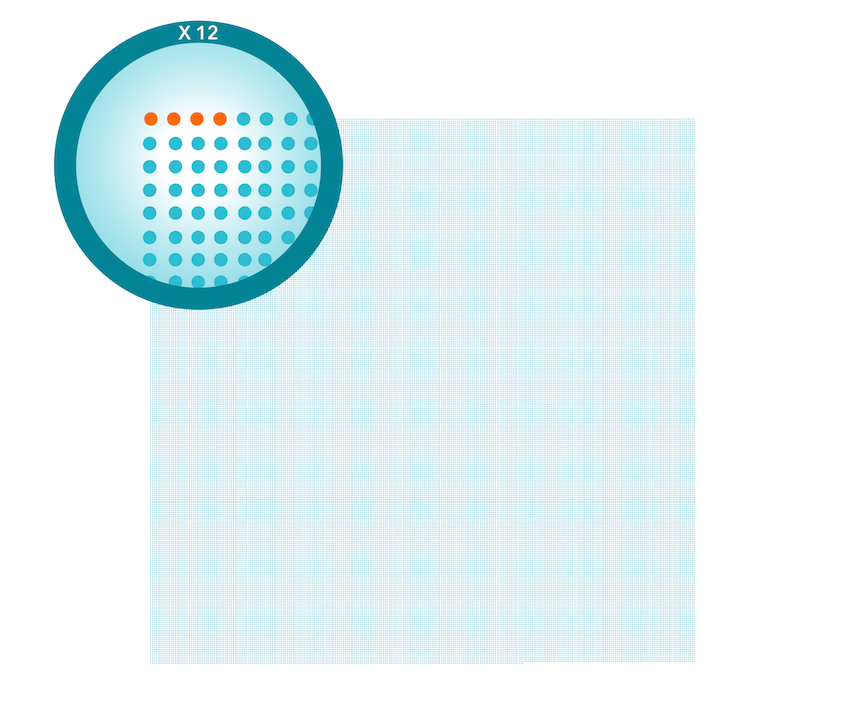
Each dot illustrates one of the 80,000 hours in your career. If you could make your career just 1% more impactful, or 1% more enjoyable, it would be worth spending up to 1% of your career figuring out how to do so. That would be five months of full-time work — or 800 hours. Fortunately, this guide only takes about four.
As a Effective Altruist23, I believe the most effective thing anyone one person can do is to find a career that is both fulfilling, and enables them to
make as much positive change as possible. That also means considering the long-term impact of their work, and how it aligns with their values and goals.
I am particularly interested in careers that have a high direct potential for positive impact, such as those that are fairly involved with one of the World's Most Pressing Problems.24
More specifically I am interested in careers that are involved with the following areas: AI Alignment25, Existential Risk Reduction26, and Education Reform.
Online Presence
I am a lot of places online. Although in the future this list will be shrinking rather than growing, I will try to provide
as comprehensive a list of the platforms I actively engage with. As well as if I think I will be doing so in the years to
come.27
Social (Mastadon/X/Reddit/Quora)
Out of the many socials I have the 4 that are something other than a placeholder for my username are these. They are the only accounts I am logged into
more often than not. I am fairly active viewing posts on a dozen or more subreddits daily, and same for some Quora questions. My contributions will
probably be sparse on Quora, and on reddit most likely in the subreddits r/OpenAI, r/csMajors, r/learnmath, r/mathbooks, r/matheducation,
r/puremathematics, r/math, r/compsci, r/physics, askphysics, r/theoreticalphysics, r/marinebiology, r/psychology, and r/philosophy.
Mathematics (AoPS/MathOverflow/MathStackExchange)
I am currently active on these 3 platforms for mathematics finding resources, worked out solutions, ect.28
I expect to participate in "MathOverflow", and "MathStackExchange" a lot more in the coming years.
Poetry (AllPoetry/Poets.org)
I spent a lot of time reading both classic, and contemporary poetry. A lot of this I do in books such as the Oxford Book Of English Verse.29
However when it comes to online resources for reading I utilize poets.org, and for writing in pubic, and consumption of amateur verse I spend a
fair amount of time browsing AllPoetry.
Effective Altruism / AI Alignment (Alignment Forum/EA Forum/LessWrong)
With Effective Altruism, and AI Alignment quickly becoming some of the largest, and most important areas in my life. I will be spending a considerable amount of time on these forums now, and in the coming years.30 My involvement with writing content on them as opposed to reading user created content should have a positive correlation with my knowledge on the topics.
ere I will try to stick to a overhead view of my personal philosophy. I will go into some depth realting to topics such as Minimalism, Asceticism,
Rationalism, Slow Living, Intentional Living, Classical Education, Quietism, Stoicism, and Ad Fontes Living. I realize those are fairly blanket terms, and there is really
nothing to be done about such in regards to giving a accurate preview of what is to come. What has been excluded from this to be covered in other posts are my philosophy on programming,
philosophy of physical sciences detailing my approach to (mathematics, logic, and computer science), Forms of Thinking catalouging my approach to learning, philosophy on systems covering my phliosophy on software and hardware systems,
and toward a literary life which covers my approach to literature.
Diet
he one eats is the way one thinks. A sentiment I picked up from the late Nicola Tesla who stressed the importance of high-quality food, preferring fresh vegetables,
fruits, legumes, milk, and egg whites.33 He avoided egg yolks and acid producing foods, believing they could impair health and mental function. He directly linked his diet as the sustaining
force behind his veracious work ethic. Even being adamant about the avoidance of stimulants such as coffee, tea, and tobacco considering them harmful to both physical and mental
well-being. I share his conviction of some of the harsher stimulants like (tobacc), and in others like coffee I am currently more torn on.34 I am completely opposed to the open disdain of tea however
and do not plan on living a life without it. I am in a phase of my life where as a young adult I lack much of the stability that many have in there later years, and tend to throw myself entirely at
work. Writing, Developing, Researching, Studying, ect. from sometimes 10-12 hours at a time with 1-2 meals a day, and a lot of tea to sustain me. This has done no benefits to me as I have suffered from
Sleep Apnea, Microsleep Blackouts, and Sleep Paralysis.35 Admittely most of my unconventional polyphasic sleep of around 3-4 hours per day comes from these Microsleep Blackouts, and the Sleep Paralysis from
my mind being ready to get back to work while my body lies wholly opposed. I am currently into research about correcting my diet so I will share some of what is planned now.
The goal is to rely upon a more Alkaline Diet.36 The theory is that acidic foods cause acidosis, and mucus in the body leaving a breading ground for harmful bacteria and disease. In short that this
can all be avoided with some form of Naturalist diet relying on mostly fruit and vegitables. At the current time I have no plans of converting in full to such a diet. The claims are interesting, and from
anecodotal evidence I can even vouch for the short term results. However only raw uncooked fruits, and vegitables is out of the realm of plausiblity for me currently. I am leaning toward something more simialar
to what is seen on this channel. Something of this sort allows me to continue to polish my culinary ability, learn about various cultures of food, and to eat a healthy
diet routinely without lack of variety. I do not plan on using this as dogma either however. I intend on enjoying the occasional French Silk Pie.
This leneancy should not do to much damage as I am rather tame on the sweets in the first place, and have alkaline alternative to practically any normal meal I'd ever eat. The only thing here is meat. I'd like to
have a proper discussion on this topic in the future. At the moment I will continue to eat chicken, beef, and turkey.37
Tell me what you eat, and I will tell you what you are.
— Jean Anthelme Brillat-Savarin, The Physiology of Taste, Original (1825)
My moral framework is anchored in compassion, equality, and a deep concern for the preservation of what I consider sacred.39 I score 76% in Care,
reflecting a strong inclination toward protecting others from harm and responding to suffering with empathy and action. With 98% in Equality, I
have an almost uncompromising commitment to fairness, reciprocity, and the dismantling of unjust hierarchies. I also score 92% in Purity, though
this is less about traditional morality and more about preserving psychological clarity, resisting moral degradation, and aspiring to personal and
cultural integrity. My 61% in Loyalty reveals that I value meaningful bonds and principled allegiance—loyalty not to groups by default, but to
people, ideas, and causes that earn my trust. At 32% in Authority, I am skeptical of power structures and deferential hierarchies, favoring earned
respect over institutional obedience. Lastly, my 27% in Proportionality suggests a moral leaning away from strict deserts-based justice; I tend to
prioritize compassion over calibration, and mercy over retribution.40 Altogether, these values orient me toward a vision of life that is cooperative
rather than competitive, redemptive rather than punitive, and always questioning of the forces that claim to rule us.
Entertainment
As im sure you have figured out by now I am a bibliophile, cinephile, and audiophile.41 I love to read, watch movies, and listen to music. I also enjoy playing video games, but not a lot of story mode games anymore. I also don't put as much time into gaming as I used to.
I just stick to the few games I am already familiar with, as there is little to no learning curve required for continued enjoyment. I am in support of piracy, and I do not pay for any of my media.42 I do not support the current state of the entertainment industry,
and I do not plan on supporting it in the future. However I do contradict that statement in a few ways to make my life drastically easier. Such as paying for Tidal in order to have a high quality music streaming service, and last.fm for tracking everything
I listen to.43 I also pay for the Criterion Channel to have access to a large library of classic films, and documentaries.44 Criterion Channel is the only place I watch films for the most part. On the occassion I want to watch something new, obscure, or a
non classic favorite I will use either HuraWatch, or Soap2Day. For anime I use AniCli, and for manga I use MangaFire. For those of you wondering where I track my media, I will
list all the methods below.
Media Tracking
Uses This
Others often ask—both in real life and across various online communities—what my setup, tech stack, or "Uses This" is. I never mind sharing; I'm genuinely interested in what tools people choose and what trade-offs matter to them. However, I have a peculiar psychological makeup. The way I framed disappointment as a child likely plays a monumental role in this. Simple things such as having to compromise between my wanted color of a Nintendo 3DS or iPhone are most likely reasons for my highly idiosyncratic style of setup. This makes this post more complex than most. I can best be described as someone maximalist in scope, yet minimalist in execution—I only worry about optimizing after significant maximizing has been done. After all, "more is more."
Do I contradict myself? Very well then I contradict myself, (I am large, I contain multitudes.)
Walt Whitman, Song of Myself, 51 (1819 - 1892)
In that vein, I run a hybrid setup of a custom-built PC and an M4 Mac Mini. Between the two devices I maintain all three major operating systems, as my PC dual boots Windows 11 and Arch Linux. The drives used for Arch are properly encrypted to reduce the attack surface caused by Windows having access to them. My use of Windows is reduced to the little gaming I do socially or for reviews, while macOS—although not as involved as Arch—stays an integral part of the workflow, giving me access to a Mac-specific suite of tools I will cover in the forthcoming sections.
Software
I run Arch Linux with a tiling window manager (dwm) and rely heavily on CLI and TUI tools.
Most of my work for krisyotam.com and notes.krisyotam.com is split between Emacs Org Mode for editing Markdown and Neovim for development. The majority of collaborative dev work happens in Zed and Warp. Zed earned its place mainly for its speed and collaborative features—the ability to chat and write notes together. Warp handles my multi-tabbed Claude Code workflow, allowing me to keep my st simple rather than patching in tabbed mode. Most of my prose and verse is currently written in Typora, while for light novels, novellas, and future novels I use novelWriter. Apologies for the redundancy that follows—some items from this brief overview are re-mentioned in the section-by-section breakdown below.
Core System
Arch Linux runs with dwm, a tiling window manager created by Suckless. My opinionated views align nicely with the Suckless philosophy, so you'll notice a trend of core utilities from the Suckless rocks section. The terminal is st, paired with Warp for tabbed management of Claude Code, Gemini CLI, and Codex—plus one for aesthetic value and UI. Fish serves as my primary shell with vi-mode and the Starship prompt. tmux handles terminal multiplexing. For solo development there's Neovim (running LazyVim); for larger collaborative projects, Zed efficiently leverages CPU and GPU cores with seamless collaborative features. Emacs Org Mode handles .org files for notes.krisyotam.com as well as .md and .mdx for krisyotam.com.
PipeWire is the audio server, Dunst the notification daemon, and Pywal the dynamic colorscheme generator. btop serves as the system monitor. pass handles passwords, calcurse the calendar, and arbtt time tracking. scron replaces cron, and quark remains in use as a minimal web server. fzf provides fuzzy finding, zoxide a smarter cd, direnv per-directory environment variables, and GNU Stow manages my dotfiles. The screen locks with slock.
Communication
To keep email CLI-centric, NeoMutt pairs with Proton Mail Bridge for local decryption and reading. catgirl handles IRC, abook the address book. I recently switched from Newsboat to sfeed for more holistic control over feeds. On iPhone, Signal handles secure communication; on Pixel, a custom Signal fork called Molly. I'm planning a massive decrease in usage of Discord this year—the trade-off of privacy simply isn't worth the gain of menial conversations with strangers.
Browsers
For a brief period I entertained Brave as a replacement for my multi-browser setup due to the built-in Tor tabs. The scant simplicity that came with the downgrade offered little value. Earlier this year I reverted to qutebrowser (hardened with custom config and vim bindings), LibreWolf (hardened with Arkenfox and Tridactyl), and Tor Browser for anonymity. Surf serves as a minimal reading browser.
Over time I've used many browsers across macOS, Windows, and Linux—modern, archaic, and terminal-based—including Chrome, Safari, Opera, Waterfox, Vivaldi, Arc, Thorium, Lynx, Mullvad Browser, Zen, and Pale Moon. I'm currently considering trying the FSF's homegrown browser, IceCat.
Kagi serves as my search engine for research—the best experience I've had since manually putting Gwern's tips into practice.
2026.03.21
I have since switched to a script based launcher for a common set of browsers that handle several use cases.
Media
nsxiv handles images, mpv (with vim keybindings) handles video, mpd + ncmpcpp handle music, and Zathura handles PDFs and EPUBs. Flameshot takes screenshots. rTorrent remains my torrent client of choice—I see no changes in my future. yt-dlp handles media downloads.
File Management
nnn serves as the terminal file manager with image previews via ueberzugpp, both of which I abuse heavily in scripts as a dmenu alternative. ripgrep replaces grep with smart indexing and parallelism. fd replaces find for the same reasons. eza replaces ls—git-aware with sane grouping and metadata. bat replaces cat with syntax highlighting.
Privacy & Security
LUKS encrypts the hard drives, GnuPG handles PGP encryption, Mullvad VPN secures the connection, and Proton Mail provides end-to-end encrypted email.
Video & Graphics
The graphics setup is fairly simple: OBS Studio for recording, Inkscape for vector graphics, and GIMP for photo editing.
Development
Neovim with LazyVim handles most solo development. Zed takes over for collaborative work. lazygit provides a TUI for git operations, lazydocker for Docker management. Language toolchains include Go, Rust (via Cargo), and Python. Doom Emacs is configured for Org Mode work.
Hardware
I outsourced the most recent build to Micro Center—both due to the stress I carried at the time and the lack of resilience I knew would follow from breaking expensive parts with their ever-creeping prices. I opted for a powerful prosumer build to avoid top-of-the-line prices, something that would allow experimentation with local LLMs, voice and image models, ML training, and the massive datasets that come with them.
Both cloud and local AI models are in regular use—local models handle anything requiring privacy. Current cloud subscriptions include ChatGPT Plus (20),[ClaudeMax5x](https://claude.ai/)(100), and Google AI Pro ($20). Local models running via Ollama include deepseek-r1:14b, qwen2.5:14b, llama3.1:8b, and mistral:7b. Faster-Whisper handles speech-to-text, and Stable Diffusion sees occasional use for image generation.
Contact Me
I have Signal, X, and Instagram. I also have accounts on a lot of other major sites.
This is strictly to reserve the username krisyotam. I will not respond to any of
your messages on these platforms. If you want to contact me all methods are listed here.
Footnotes
Pascal's Pensées (French for "Thoughts") is a collection of fragments on theology and philosophy, published posthumously in 1670. This particular passage (§139 in the Lafuma numbering) is one of Pascal's most famous observations on the human condition. See the full text at Project Gutenberg. ↩
The "now page" concept was popularized by Derek Sivers as a way to share what you're focused on at this point in your life. It's meant to be more dynamic than an about page but less ephemeral than social media. ↩
Systems programming involves writing software that provides services to other software, such as operating systems, compilers, and network protocols. My interest in this area stems from the desire to understand computers at a fundamental level—something increasingly rare in an age of abstractions. ↩
The technology adoption lifecycle categorizes users from innovators to laggards. I deliberately position myself as a "never adopter" for most consumer technology, preferring to wait until tools have proven their long-term value. See Crossing the Chasm for the canonical framework. ↩
The Levenshtein distance measures the minimum number of single-character edits (insertions, deletions, substitutions) needed to change one string into another. It's named after Soviet mathematician Vladimir Levenshtein who introduced it in 1965. ↩
This aligns with Chesterton's fence—the principle that reforms should not be made until the reasoning behind the existing state of affairs is understood. ↩
Classical education follows the Trivium (grammar, logic, rhetoric) and Quadrivium (arithmetic, geometry, music, astronomy). Dorothy Sayers' essay "The Lost Tools of Learning" (1947) is the foundational modern text on this approach. ↩
The progymnasmata are a series of fourteen rhetorical exercises developed in ancient Greece and Rome. They were the standard curriculum for teaching rhetoric for over 1,500 years. See The Forest of Rhetoric for a comprehensive guide. ↩
Ada Lovelace (1815-1852) is widely regarded as the first computer programmer for her work on Charles Babbage's Analytical Engine. Her notes on the engine include what is considered the first algorithm intended for machine processing. ↩
From "Song of Myself" (1855), section 51. Whitman's embrace of contradiction and multiplicity is central to his democratic vision of the self. ↩
80,000 Hours is a nonprofit that provides research and support to help people find careers that effectively tackle the world's most pressing problems. The name refers to the approximate number of hours in a typical career. ↩
Studies on AI productivity gains vary widely, but some research suggests 20-80% improvements in certain tasks. See MIT Sloan's research for academic findings. ↩
Obsidian is a knowledge base that works on local Markdown files. Its graph view and backlinking features make it ideal for building a personal wiki or Zettelkasten. ↩
Cognitive Load Theory (Sweller, 1988) describes how working memory limitations affect learning. Understanding it is essential for designing effective study materials and curricula. ↩
Anders Ericsson's research on deliberate practice shows that expertise comes from focused, structured practice with immediate feedback—not mere repetition. ↩
Scott Young's Ultralearning (2019) describes an aggressive, self-directed learning strategy. His MIT Challenge—completing MIT's 4-year CS curriculum in 12 months—demonstrated the approach. ↩
AI training data curation is becoming increasingly valuable as models require higher-quality, specialized datasets. See Scale AI and Appen for context on this industry. ↩
The Trivium consists of Grammar (the mechanics of language), Logic (the mechanics of thought), and Rhetoric (the use of language to instruct and persuade). These three arts were considered foundational to all other learning. ↩
From the 1993 film directed by Steven Spielberg, adapted from Michael Crichton's 1990 novel. Ian Malcolm's character represents the voice of scientific caution against hubris. ↩
Benjamin Todd co-founded 80,000 Hours in 2011 while studying at Oxford. The quote appears in the 80,000 Hours Career Guide. ↩
80,000 Hours maintains a list of problem profiles ranking global issues by scale, neglectedness, and tractability. Currently, AI safety and biosecurity rank among the highest priorities. ↩
AI alignment is the challenge of ensuring that artificial intelligence systems act in accordance with human values and intentions. Key resources include MIRI, the AI Alignment Forum, and Anthropic's research. ↩
Existential risk refers to risks that could result in human extinction or permanent civilizational collapse. The field was largely established by Nick Bostrom's work at the Future of Humanity Institute. ↩
Cal Newport's Digital Minimalism (2019) provides a philosophy for technology use focused on intentionality rather than abstinence. ↩
Art of Problem Solving (AoPS) was founded by Richard Rusczyk and offers resources for students interested in competition mathematics. Their textbooks are considered among the best for developing mathematical maturity. ↩
The Oxford Book of English Verse is an anthology first published in 1900 by Arthur Quiller-Couch. Multiple editions have been published since, making it one of the most influential poetry anthologies in English. ↩
LessWrong is a community blog focused on rationality, cognitive science, and AI alignment. It was founded by Eliezer Yudkowsky in 2009 and has been influential in the rationalist and AI safety communities. ↩
Competitive programming involves solving algorithmic problems under time constraints. Platforms like Codeforces and LeetCode host regular contests and maintain problem archives. ↩
Capture The Flag competitions are cybersecurity contests where participants solve security challenges to find hidden "flags." They're excellent for learning practical security skills. ↩
Nikola Tesla's dietary habits are documented in various biographies, including W. Bernard Carlson's Tesla: Inventor of the Electrical Age (2013). Tesla was known for sleeping only 2 hours a night and maintaining strict dietary regimens. ↩
The research on caffeine is genuinely mixed. Matthew Walker's Why We Sleep presents a strong case against regular caffeine use, while other researchers argue its cognitive benefits outweigh costs. See Gwern's caffeine analysis. ↩
Sleep disorders like sleep apnea affect an estimated 22 million Americans. The Sleep Foundation provides evidence-based information on sleep health. ↩
The alkaline diet lacks strong scientific support—the body tightly regulates blood pH regardless of diet. However, the diet's emphasis on fruits and vegetables provides benefits through other mechanisms. See this systematic review. ↩
The health and ethical implications of meat consumption remain contested. For a balanced overview, see Our World in Data's analysis. ↩
Section to be expanded with details on my exercise routine, which has historically been inconsistent but is currently under development. ↩
Jonathan Haidt's Moral Foundations Theory identifies six (originally five) psychological foundations that underlie moral judgments across cultures: Care/Harm, Fairness/Cheating, Loyalty/Betrayal, Authority/Subversion, Sanctity/Degradation, and Liberty/Oppression. ↩
"-phile" from Greek philos (loving). These terms describe someone with an intense appreciation for books (bibliophile), cinema (cinephile), and high-fidelity sound reproduction (audiophile). ↩
The ethics and economics of digital piracy are complex. For a nuanced view, see this collection of essays. My position is pragmatic rather than principled—I support creators directly when practical. ↩
Tidal offers lossless audio streaming (FLAC/MQA), which matters for critical listening. Whether most people can distinguish lossless from high-quality lossy in blind tests is debatable. ↩
The Criterion Collection is a distribution company focusing on art house, international, and classic cinema. Their restorations and supplementary materials are considered among the best in the industry. ↩
Sign in with GitHub to comment
Loading comments...
Citation
Yotam, Kris · Jun 2025
Yotam, Kris. (Jun 2025). About Kris. krisyotam.com. https://krisyotam.com/notes/on-myself/about-kris